Blended learning options to foster relational and restorative practice.
“Relationships built through restorative practice are the oxygen people and communities need to survive and thrive…” (Dr Jim Longo, Washington and Jefferson College)
We believe that great public services are built on strong relationships. Every decision, difference, disagreement, interaction, and outcome relies on the quality of human connection.
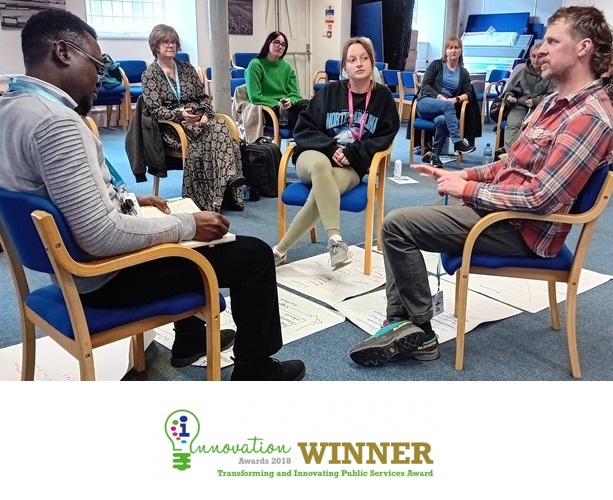
Our role in this movement is to help organisations upskill people in vital relationship skills.
We provide frontline staff and leadership teams with the practical communication skills and strategies they need to build deep, trusting connections.
This reduces employee psychosocial harm, which is proven to improve workforce productivity, retain staff, reduce sick days.
We believe relational and restorative practice is a core enabler of modern public services.
Relational and restorative practice is a workplace and lifestyle philosophy for establishing, building and maintaining positive relationships, addressing and resolving confrontation and conflict and repairing harm.
It’s an evolving social science that presents a set of theories, principles, processes and skills that help people to work together better.
In the workplace, relational and restorative practice requires everyone to really consider their part in creating healthy, open, inclusive cultures.
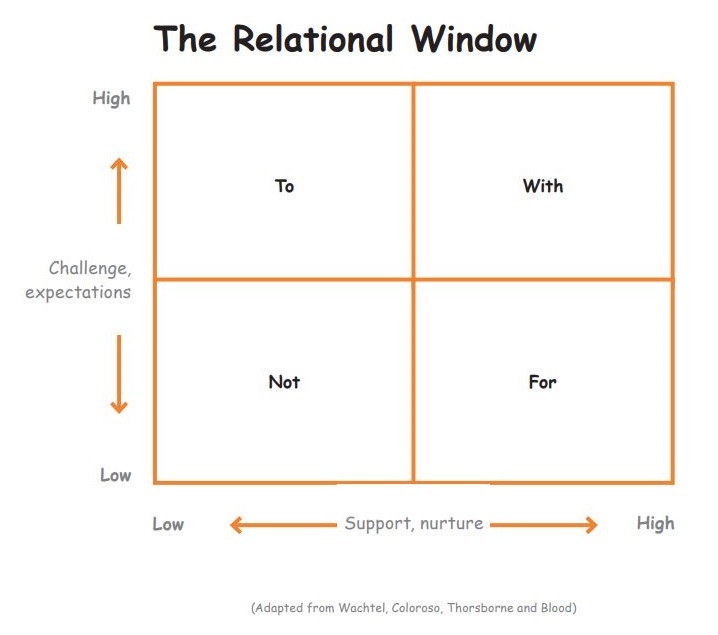
Learning how to better work ‘with’ colleagues, patients and families, rather than doing things ‘to’ or ‘for’ others guides our thinking, saying and doing.
Starting with individual and collective strengths, we become more purposeful, deliberate and confident to have conversations that are challenging, hold each other to account, problem-solve and plan effectively together.
This video shows the New York Red Bulls players giving their coats to mascots during heavy rain in March 2024. It’s a great example of ‘behaviour contagion’, and demonstrates really well what happens when we are the first to adopt relational and restorative practice; model it at every opportunity, and watch it catch on!
We’d love to hear from you and to start a conversation.
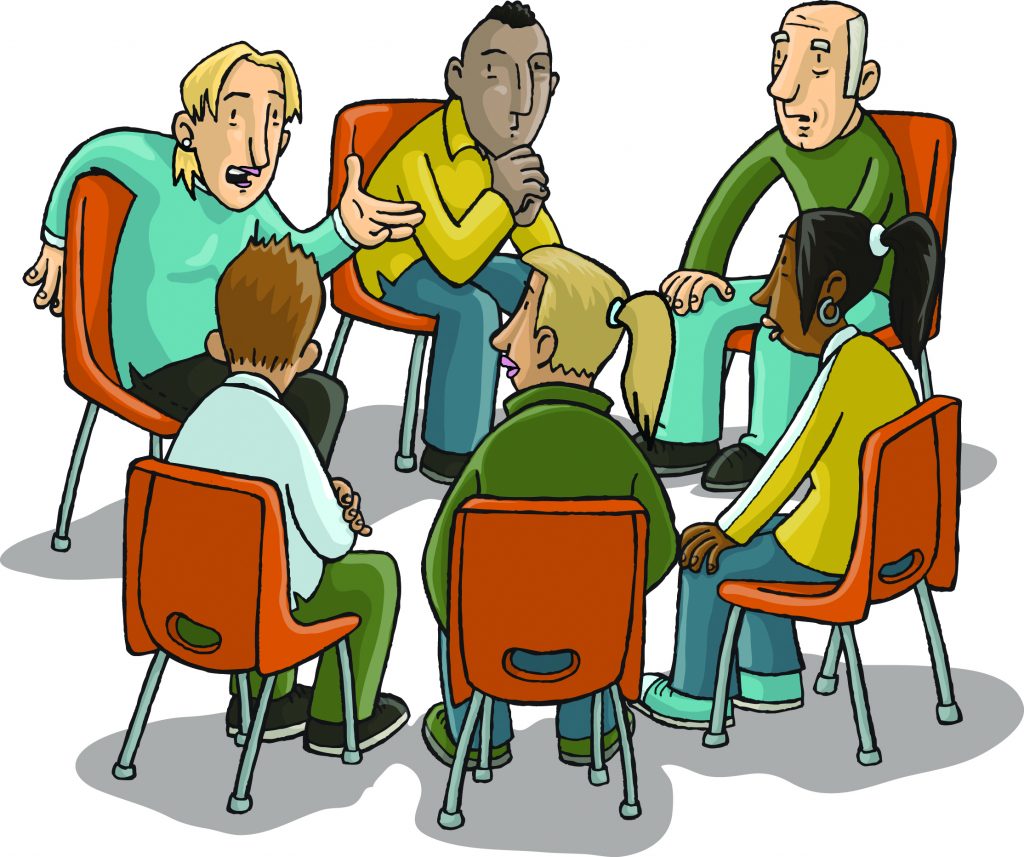
Blended learning options to foster relational and restorative practice.

Copyright © 2021 Restorative Thinking Limited